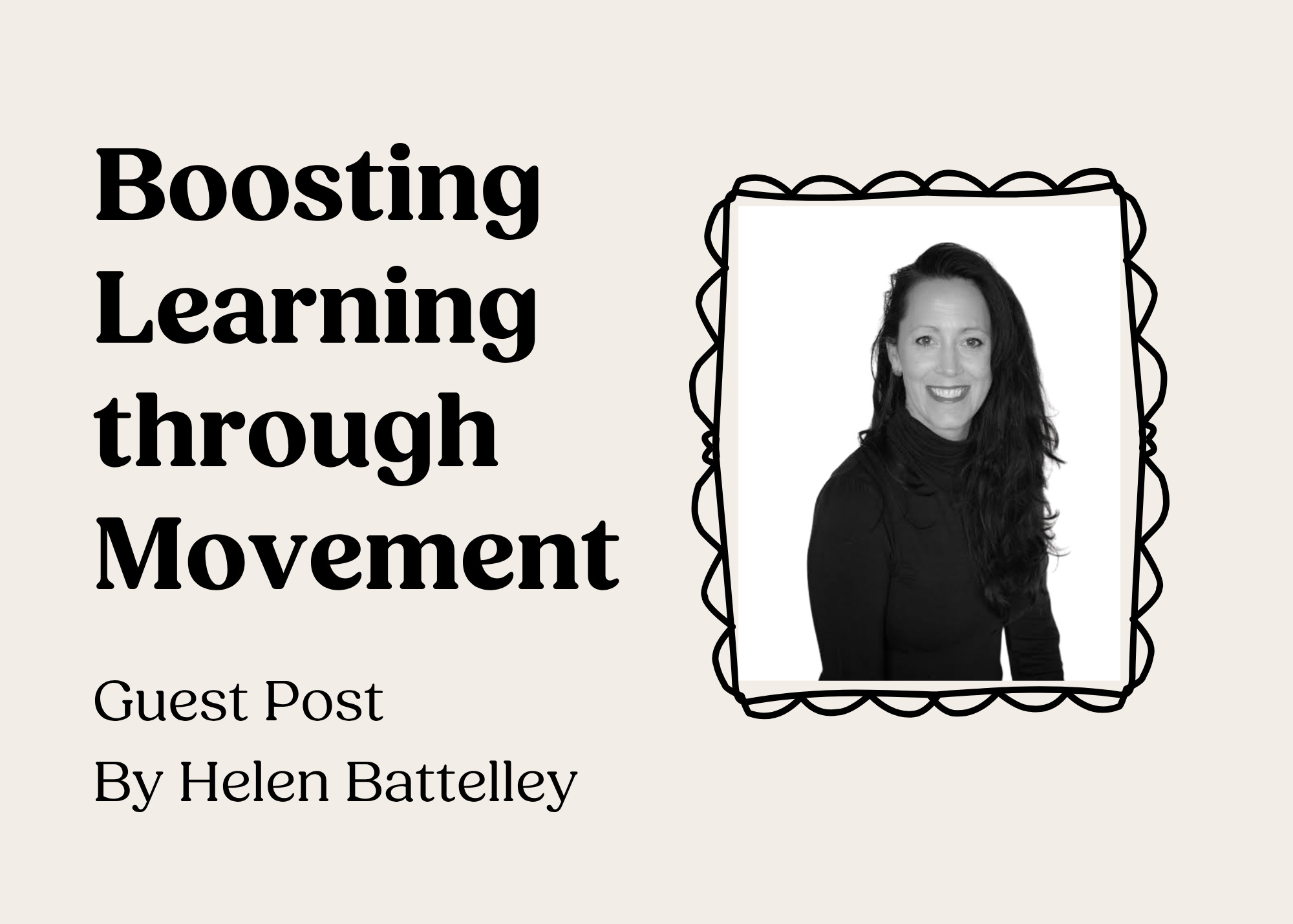
Guest Feature: Boosting Learning Through Movement by Helen Battelley
Why Children Need to Move to Learn - by Helen Battelley

Boosting Learning Through Movement
By Helen Battelley
When I walk into an early years setting, one of the first things I notice is the movement. Not the displays on the wall, not the resources neatly arranged on shelves, but the movement.
Are children climbing, crawling, rolling, stretching, spinning, balancing and exploring the space with their bodies? Or are they mostly sitting, waiting, watching and listening?
Because here’s the thing I’ve learned over years of working with children and educators: movement is not a break from learning, it is learning.
As a movement consultant, I spend a lot of time talking to educators about how physical activity shapes children’s development in ways we often underestimate. When children move, they are not simply exercising their bodies. They are building the foundations for thinking, communicating, concentrating and managing their emotions.
And yet movement is still sometimes seen as an ‘extra’ in the day rather than a central part of how children learn.
Let me explain why that matters.
(You can see more about my observation and audit of EY settings here - Helen’s Lens)
The Body Is the Child’s First Learning Tool
Before children learn with pencils, screens or books, they learn through their bodies.
From the moment babies begin to reach, roll and crawl, they are gathering information about the world. Every push, pull, wobble and tumble helps them understand where their body is in space and how it relates to everything around them.
These early movement experiences help children develop balance, coordination, strength and body awareness. But they also support something much bigger: the development of the brain and the whole child!
When children move, multiple systems in the body are working together. Their sensory systems are processing information, their muscles and joints are providing feedback and their brain is organising all of this information into patterns that support future learning.
Movement is quite literally helping to build the architecture of the developing brain.
What Happens When Children Don’t Move Enough?
One of the challenges we are seeing more frequently in early childhood settings is that many children are arriving with fewer movement experiences than previous generations.
Children today often spend more time in car seats, high chairs, pushchairs and too long in front of screens. Opportunities for free, exploratory movement are sometimes limited.
This can show up in lots of different ways.
You might notice a child who struggles to sit comfortably on the floor during group time.
Another child may find it difficult to coordinate their body when climbing or balancing. Some children tire quickly or appear less confident moving through space.
Movement challenges can also affect concentration, listening and emotional regulation.
When children’s bodies are not getting the movement input they need, it can be harder for them to settle, focus or manage their feelings.
Often the answer isn’t more instructions, sitting still or stricter routines, the answer is more movement. Movement Helps Children Feel Ready to Learn.
One of the things I often say during training sessions is that movement helps children feel “ready” in their bodies.
Think about how you feel after you’ve stretched, walked or moved around after sitting for along time. You feel more alert, more comfortable and able to concentrate again.
Children are exactly the same. When children have opportunities to swing, spin, climb, jump and roll, they are activating systems in the body that support attention, regulation and emotional balance.
Movement helps children organise themselves. That’s why you might see a child who was struggling to focus suddenly become more settled after running outside, dancing to music or climbing on equipment. Their body has received the movement input it needed to function well.
It’s Not About Structured Sport
When we talk about boosting learning through movement, people sometimes imagine formal physical education lessons or organised sports.
But for young children, movement learning looks very different.
It happens when children:
• crawl through tunnels
• climb over cushions
• roll down grassy hills
• spin in circles
• dance to music
• balance along logs or benches
• carry, pull and push objects
• explore different ways their body can move
These experiences help children build strength, coordination and confidence. They also give children opportunities to take manageable risks, solve problems and develop resilience.
And perhaps most importantly, movement is joyful. Children are naturally driven to move. When we create environments that allow them to explore movement freely, we are supporting their natural curiosity and motivation to learn.
The Role of the Adult
As educators, our role is not to control or constrict children’s movement but to enable it.
Sometimes this simply means stepping back and allowing children the space to explore their bodies and discover the true embodiment of movement.
Other times it means intentionally designing environments that encourage movement. This might include:
• creating obstacle courses indoors
• providing loose parts that children can climb over or balance on
• offering music and space for dancing
• using outdoor environments creatively
• building movement breaks into the day
Adults also play an important role in modelling movement. When educators join in with enthusiasm – jumping, balancing, stretching or dancing – children feel more confident to explore movement themselves.
Movement becomes something shared rather than directed.
Movement Builds Confidence
One of the most rewarding things I see in my work is the way movement builds children’s confidence.
When a child learns to balance across a beam for the first time, climb to the top of a structure or jump down safely, they experience a powerful sense of achievement.
These small successes matter. They tell children: “I can do this.”
And that sense of competence doesn’t stay in the movement space. It transfers into other areas of learning. Children who feel confident in their bodies often become more willing to try new things, communicate with others and persevere when tasks become challenging.
Movement helps children believe in themselves.
A Shift in Perspective
If there’s one thing I hope educators take away from my work, it’s this:
Movement is not separate from learning.
It is deeply connected to how children develop physically, emotionally and cognitively. When we prioritise movement in early childhood settings, we are not taking time away from learning. We are strengthening the foundations that make learning possible.
Children need to move to think, to focus, to regulate their emotions and to feel confident in the world around them.
So the next time you look around your setting, take a moment to notice the movement. Are children stretching, balancing, climbing and exploring?
Because when children are moving, they are not just playing.
They are building the skills they need to thrive.
Helen recently created a fantastic resource for EY educators called the Playthings Cards – you can find out more about them here: Playthings Movement Cards
I also did a great interview with her that paid subscribers can find HERE.
Helen Battelley, an internationally respected Early Years Physical Development consultant, trainer, and author, brings energy and a motivational approach to raising the profile of Physical Activity (PA) in the early years.
As the chair of the National Early Years Active Start Partnership (NEYASP), she leads a diverse group of stakeholders from across the UK to address the systemic challenges in the early years sector to ensure that every child benefits from the positive outcomes of play and PA.
NEYASP are taking positive action to inform and support policymakers and inspection bodies to ensure the sector is taking an evidence-informed approach and valuing the place of physical development in a child’s life, right from the moment they enter the world!
2025 was a busy year for NEYASP with the launch of Movement Matters - an advisory document for the Early Years sector.
Details of the publication can be found here:
https://www.earlymovers.org.uk/movement-matters
Find Helen on social media:
Facebook: Musicandmovementdance
X: @musicandmove and @HBattelley
Instagram: HelenBattelley
LinkedIn: Helen Battelley MA