Schools Can and Should Be Places for Play - Peter Gray Guest Article
Guest Article by Peter Gray, Ph.D.
A Special Guest for Our First Birthday Edition
I can’t quite believe The PLAYlist is one year old already. Over the past twelve months, we have shared ideas, challenged thinking, and hopefully inspired practice in ways that put play and children at the heart of everything we do.
To celebrate, Dr Peter Gray has given us permission to share one of his articles with you. Here is my overview and a link to Peter’s full article.
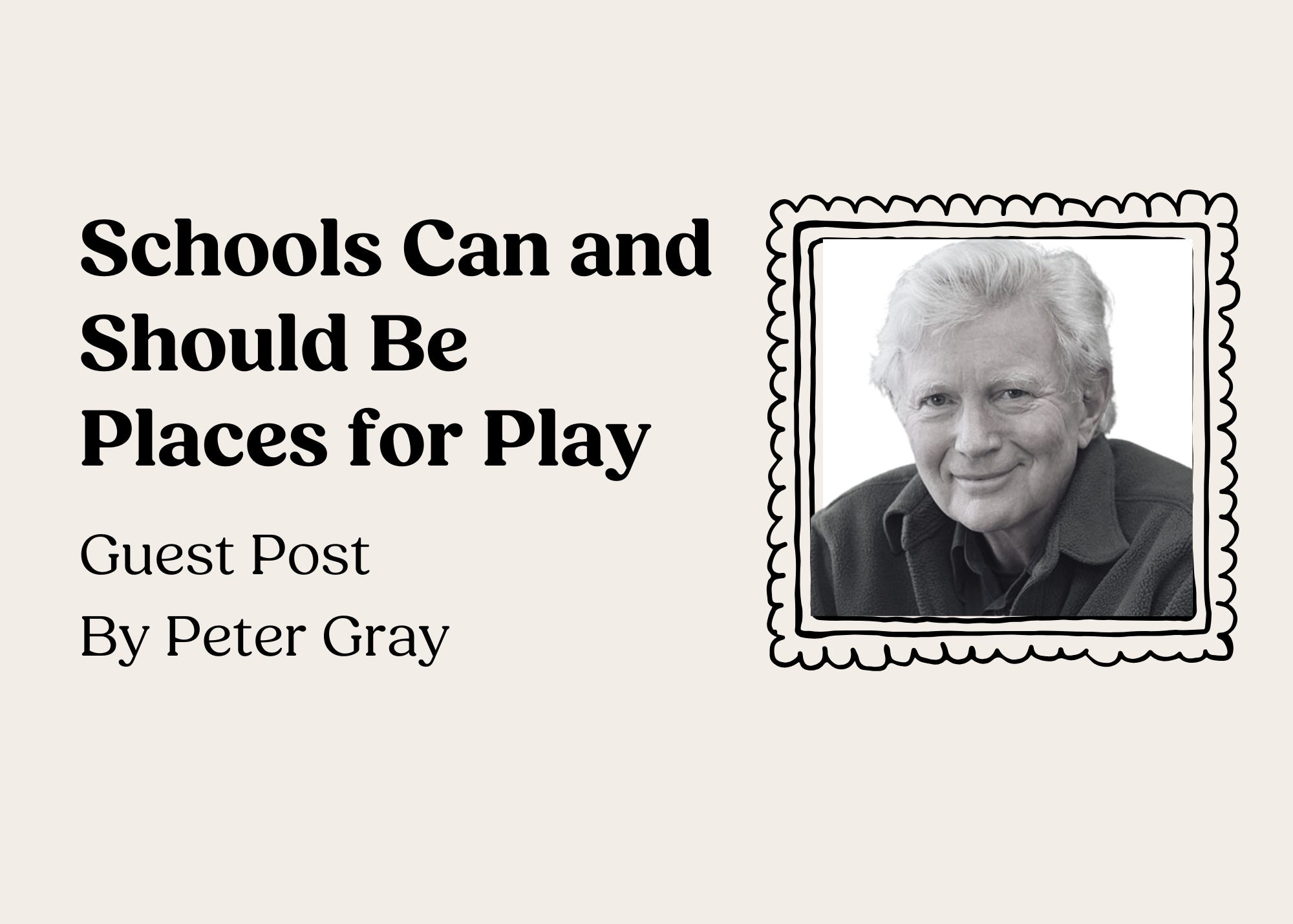
Dr Gray is a world-renowned professor of psychology at Boston College and may already be familiar to many of you. His work has shaped thinking around the world on how children learn and why play is central to healthy development. As he says,
“Children are biologically designed to educate themselves… We can maximise that instead of forcing them to do schoolwork.”
Through his books, research, and writing, he makes a powerful case for giving children the time and freedom to follow their own ideas through play, building confidence, curiosity, and the problem-solving skills they will carry through life.
Schools Can and Should Be Places for Play
By Peter Gray, Ph.D.
Play, real play, started and managed by the children themselves without adult interference, is how children learn to take charge of their own lives, solve problems, manage emotions, negotiate with peers, and make and keep friends. It is how they discover and practise activities they enjoy. This kind of play is a key part of how children develop into confident and capable adults.
Over recent decades, opportunities for this sort of play have been shrinking. Longer school days, more homework, reduced freedom to roam, and a rise in organised, adult-led activities have all pushed self-directed play to the edges of children’s lives.
Back in 2017, Peter sat down with Lenore Skenazy, author of Free Range Kids. They both shared the same concern: that children’s independence and opportunities for play were being restricted in ways that harmed their development. Their conversation led to the creation of Let Grow, a non-profit organisation that develops practical ways to bring more play and independence into children’s lives. Schools were an obvious place to start.
Not so long ago, schools were also places where children played freely with one another. Lunchtimes were longer, playtime was less regulated, and playgrounds stayed open after school. They wanted to bring that spirit back.
Two ideas that grew into something bigger
The Let Grow Experience – Teachers invite each child to think of something they would like to do on their own outside school. They get permission at home, do it, and then share their experience back in class. This simple process often changes the way parents view their children’s capabilities.
Play Club – This was Peter’s focus, a weekly hour or more of free, self-directed play at school either before or after lessons. Play Club is built on the benefits of mixed-age, unsupervised play, the kind that naturally teaches cooperation, problem solving, and leadership.
What makes Play Club work
Plenty of children and plenty of choices
Large groups create energy and variety. Outdoor spaces might have balls, ropes, hoops, and loose parts like cardboard boxes for building. Indoor spaces might offer quieter activities such as art, puzzles, or board games.
Mixed-age groups
Children from the youngest to the oldest in the school play together. Older children guide and support younger ones, while younger children bring energy and creativity that can inspire older peers. Mixed-age play often reduces bullying and helps shy or anxious children find a way in.
Minimal rules
The rules are simple: do not hurt anyone, do not damage anything valuable, stay within agreed boundaries, and no phones in older groups. Any other rules are made by the children for their own games.
Adults step back
Adult monitors act like lifeguards, present for safety but not directing play. They let children work through disagreements and solve problems themselves. This teaches self-regulation, resilience, and social problem solving.
What happens when schools give time for play
The first Play Clubs started in Long Island, New York, with the support of superintendent Michael Hynes. These early programmes showed how quickly children benefit from more opportunities to play with peers. Teachers noticed improved focus in lessons and more positive relationships. Parents saw their children becoming more confident and independent.
Research confirmed these observations. Many children said their favourite thing about Play Club was making friends. Adults reported that older children took pride in being role models for the younger ones and that children across the school were more cooperative.
One teacher in South Carolina shared the story of a boy who had been known for poor behaviour and bullying. After joining Play Club, he began to smile, laugh, and play alongside others. Within weeks, his behaviour in class transformed. The friendships he made through play helped him feel part of the school community for the first time.
Why this matters
Play Club is about more than giving children a break from lessons. It helps them build friendships, practise leadership, develop creativity, and grow resilience. It is a way of giving back time for the kind of play that has been pushed out of many children’s daily lives.
Imagine if schools offered this kind of play every day, built into the timetable, and kept playgrounds open after school with simple resources for children to use. It would cost very little and could transform the wellbeing of our youngest generations.
If this has sparked an idea about something you could do in your school or setting then the Let Grow website is packed with free resources and practical ideas that might help to get you started.
Find the original article here on Peter’s Substack: Schools Can and Should Be Places for Play – Peter Gray