

The Writing Framework - Do What We Know Works [Listen Along 🔊]
Here's my view on how we should approach The Writing Framework

Hey PLAY People,
As you may know, every month on The PLAYlist, we release a set of 5 activities that centre around a theme! This article is designed to provide some insight and context for those activities.
As a free subscriber, you have access to this listen-along article that you can read below (or click the play button at the top of the page to hear me read it).
If you’d like access to the 5 brilliant, practitioner-crafted activities that go with this article, become a paid subscriber today, and you’ll have access to this month’s activity pack as well as a whole host of other goodies.
Enjoy! 🎉
The Writing Framework - Do What We Know Works
By Dr Alistair Bryce-Clegg
(Find your 5 Early Writing Activities below this article! )
I have noticed a distinct shift since the writing framework landed. I am involved in more conversations about ‘formal’ handwriting, more questions about ‘appropriate’ expectations and a sense, in lots of places, that things definitely need to get more formal in order to produce results.
The risk is that this is usually the point where Early Years practice starts to disappear and become more like Key Stage 1 (or even 2!).
The framework is far from ideal, but it isn’t asking us to do something radically different to what is developmentally appropriate – it is all about knowledge and interpretation. Writing is a complex process, and it needs to be gradually built, from the foundations upwards.
So, for me, the problem is not the guidance (although it could be better) it is how quickly we default (or are pushed) to the end point, missing out the essential steps in between.
One of the most quoted lines from the framework is that children need to master the foundations of writing, things like handwriting, spelling and sentence construction, and that’s true. But what often gets missed is the line that follows closely behind it, that children should not be expected to write at length before they are ready. That one sentence should shape everything we do, because it gives us permission (or rather, reminds us) to prioritise readiness over output.
But – we need to know what ‘readiness’ looks like.
If you go straight to handwriting as a priority, then you are asking children to perform a complex act before the systems that support it are in place. Writing places a significant load on working memory, creativity, physical development, creative and critical thinking and general cognitive load, which means that if too many elements are competing at once in a developing brain there is only one outcome and that is failure.
What Getting Ready to Write was really about
When I wrote Getting Ready to Write, it was all about helping practitioners to know what those foundations were and how to get them in place in a developmentally appropriate way.
We know that writing doesn’t start with letter shapes, it starts with movement, control, coordination, and the ability to generate and hold ideas. Those early stages of development, the ones that often look like play, are not a precursor to writing. They are writing in its earliest form.
The framework reinforces this, whether it uses that language or not.
It talks about transcription and composition. Transcription being the physical act of handwriting and spelling and composition being the creation and organisation of ideas, and that all starts with talk. Before children can write sentences, they need to be able to say them. If you can’t say it, you can’t write it!
The bit we rush, and shouldn’t
In my experience, if there is one element of writing that consistently gets shortchanged, it is talk. Children need to rehearse sentences out loud. They need to explain, narrate, negotiate, invent. They need to play with language in meaningful contexts. The framework explicitly highlights oral composition as part of early writing development, it is a core element of the process. But this is often the first thing to be squeezed when the pressure is put on.
We need to get way more physical
We talk a lot in Early Years about how important movement is to children’s development and ability to regulate. But, it is often treated as something separate from writing rather than something that sits right at its core. The framework acknowledges the physical demands of handwriting and the need to support them. Without that physical readiness, handwriting becomes a massive effort and that puts children off attempting it. Children get tired quickly, their grip is inconsistent and their control is limited. This in turn again causes their cognitive load to increase, and so the negative spiral continues.
Engagement changes everything
One of the quiet messages within the framework is about motivation. Children need to want to write, they need to see purpose in it. They need to feel that what they are doing has meaning and this is where provision becomes critical. You can have the most beautifully planned fine motor activities, but if they don’t engage the children, then there is no point. The children who most need those experiences will just opt out.
Instead of creating ‘writing activities’, we need to create environments where writing behaviours can emerge. Where children are manipulating, constructing, storytelling, and within that, they begin to represent their ideas in increasingly sophisticated ways.
Recording… or performing?
There is also something to be said about how we document learning. For years, we have created systems that showcase writing, often beautifully, but in ways that are largely adult-owned. Perfect presentation, carefully curated content, and very little genuine child involvement.
If children are going to see themselves as writers, they need to have ownership of the process. They need to make marks that matter to them, revisit them, talk about them, and build on them. Not everything needs to be neat and correct, it just needs to be meaningful.
So where does that leave us?
Reception is not about producing polished pieces of writing. It is about building the foundations that make writing possible.
That means:
prioritising physical development alongside fine motor control
investing a lot in talk and language
creating meaningful, engaging ways for children to represent their ideas
teaching transcription, but in a way that is developmentally appropriate and well-sequenced
So, rather than doing more, or by doing it earlier, the real challenge is to do what we already know works based on the science and research about how children learn to write using all of the complex elements that have to come together for ultimate success.
Remember! This article comes with 5 great, practical activities that you can download now! Join as a paid subscriber today to access your activities, as well as a whole host of other goodies!
Who Makes Our Activities?
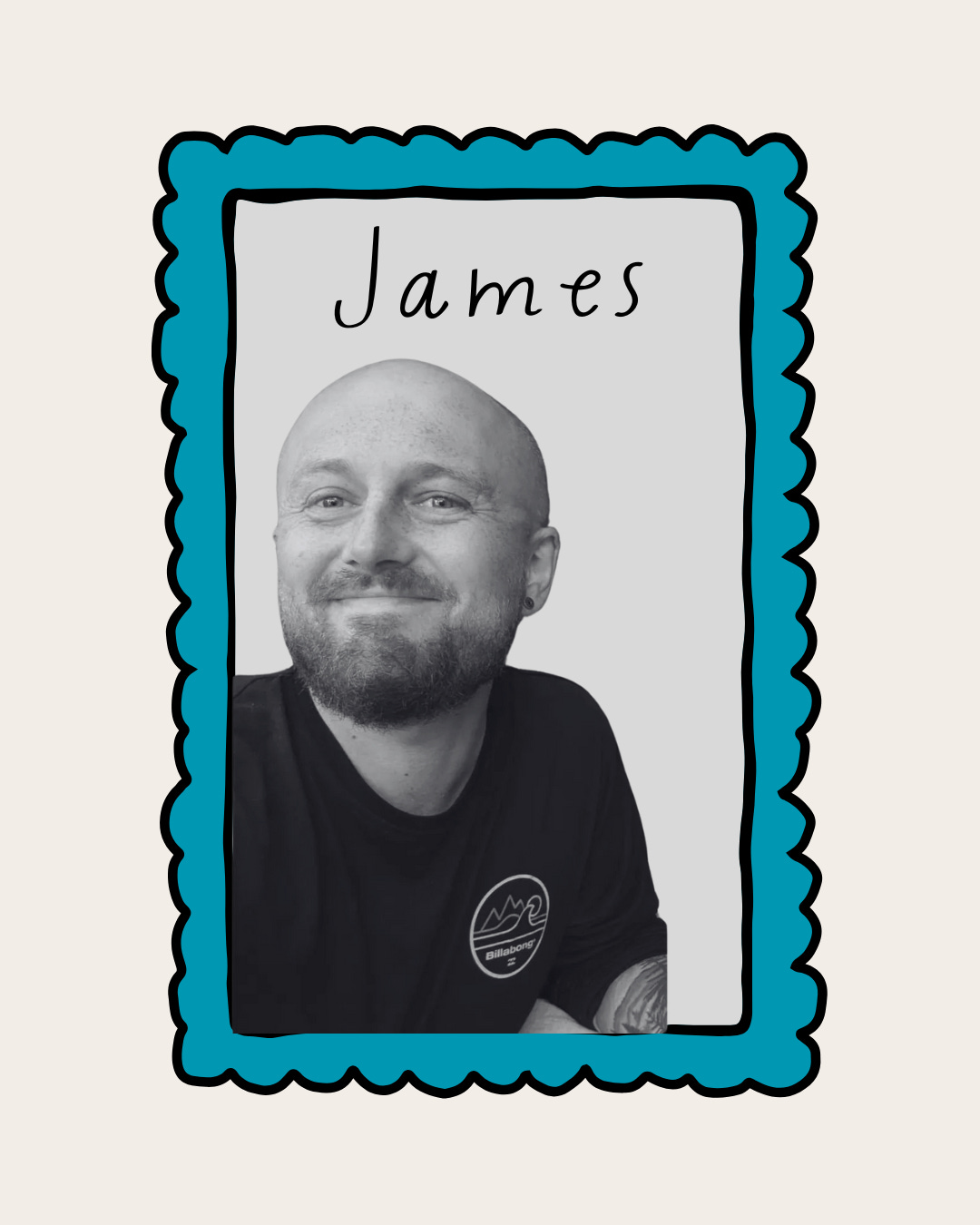
Hello PLAYlisters! My name is James Davolls and I am an Early Years Lead and author working at Charborough Road Primary School in Bristol. I currently teach Preschool-aged children and have over a decade of Early Year’s teaching experience (I know, I don’t look that old, thanks guys!) I have two children of my own, 4 and 6, so I am very much living and breathing the Early Year’s life at home and in school. I have worked across several diverse settings across Bristol, leading in all of them.
I am passionate about outdoor and adventurous/risk play and love developing provisions that inspire and challenge children’s development.
Fun Facts....growing up, my dream job was to be a Butlin’s Redcoat (I never achieved this!) I am one of seven children, and I love pizza. My wife always says that without her, I would have the diet of a Teenage Mutant Ninja Turtle!